


About the authors:
Maike Andresen is Full Professor of Human Resource Management and Organisational Behaviour at the University of Bamberg.
Janine Bosak is Full Professor of Organisational Psychology/Behaviour and HRM in Dublin City University Business School.
Douglas Tim Hall is Professor Emeritus in Management and Organizations; Boston University, USA.
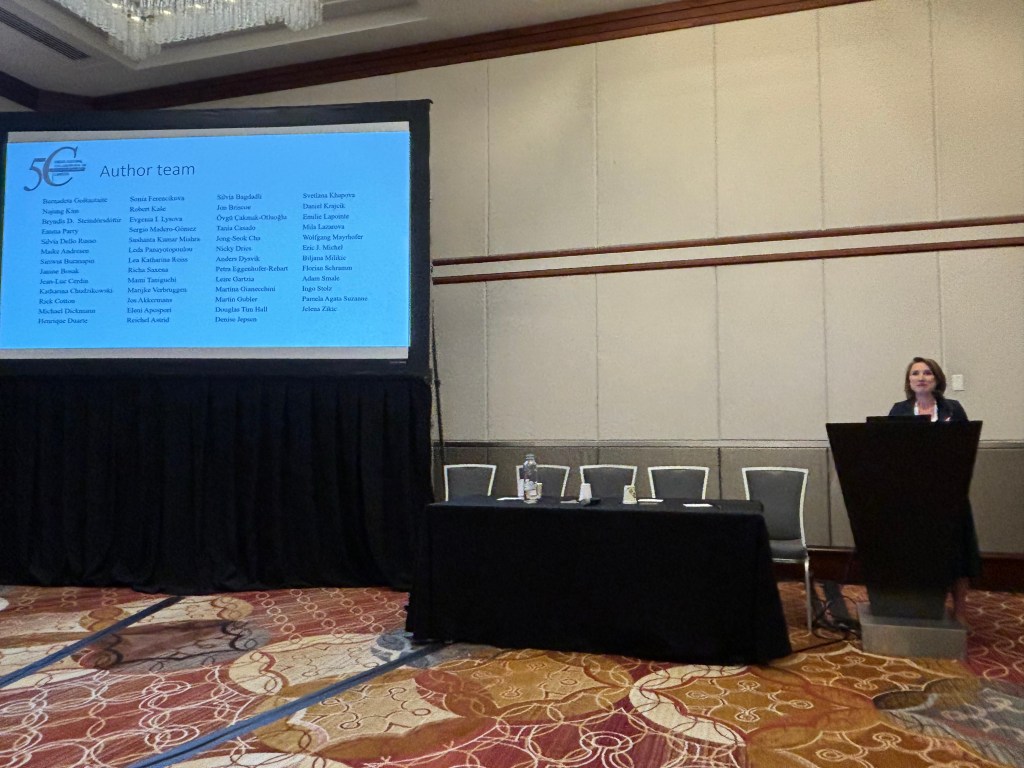
The 5C research group was delighted to have another symposium accepted and presented at the Annual Academy of Management (AOM) conference. This year’s symposium entitled “Career outcomes and diversity: New scholarship and directions” presented at the 84th Annual Meeting of the Academy of Management in Chicago featured five different research papers. Four papers presented in this symposium stem from the 5C project (Cross-Cultural Collaboration on Contemporary Careers) complemented by one paper from other career scholars. The ‘red thread’ for these papers was their focus on investigating individual careers and career outcomes through a diversity lens with each of the papers adopting a slightly different perspective and embracing a different diversity variable ranging from age, gender, family status, social origin and culture.
Specifically, the presenters were encouraged to provide answers to the following question:
- What do we learn that is new about diversity and careers?
This question was addressed via the use of different methodological approaches and datasets including cross-cultural correlational data that allowed testing for both micro-level (e.g., age, social origin) and macro-level characteristics (e.g., education expenditure) per country to understand and examine individual career-related attitudes and behaviors as well as experimental data that allowed for testing causal relationships.
In the first paper entitled “Age and career resilience across countries: A multi-level study on the role of country level education expenditure and unemployment rate” presented by Bernadeta Goštautaitė from ISM University of Management and Economics/Lithuania, the authors aimed to test the unexplored relationship between employee age and career resilience, which is critical given aging societies around the world. Building on Conservation of Resources theory and Socio-Emotional Selectivity theory, the paper using 5C data examines whether older age is associated with both lower and higher career resilience due to reduced career optimism but increased positive career meaning, respectively. In addition, the paper examines the moderating role of macro-level economic indicators (i.e. education expenditure; unemployment rate) in the age-career resilience relationship, and in doing so, highlights the importance of examining individual careers within a country-level context.
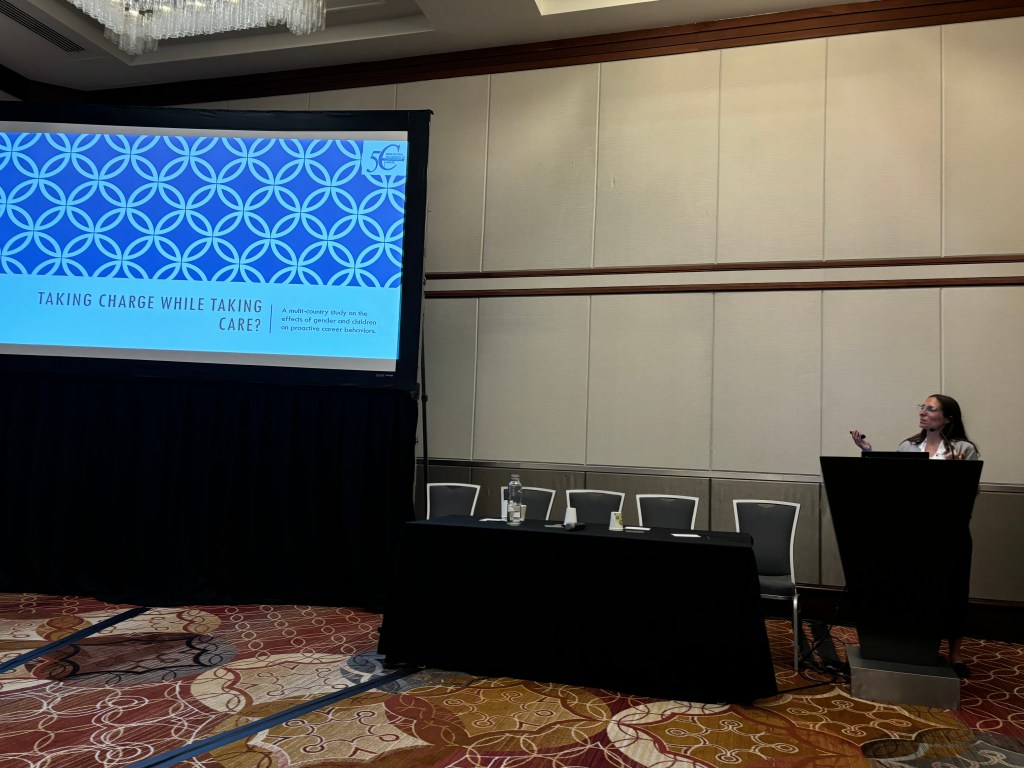
The second paper on “Taking charge while taking care? A multicountry study examining the role of gender, parental status, and supervisor support for proactive career behaviors” led by Marijke Verbruggen from KU Leuven, Belgium and presented by Pamela Agata Suzanne, examines the interplay of genderand parental status in predicting proactive career behaviors and boundary conditions of these relationships. Specifically, building on social identity theory, the authors expect that men, more than women, show greater proactive career behaviors in line with prototypical male rather than female norms and that this might be particularly the case for fathers and mothers. These differences are further expected to be more pronounced in organizations with lower supervisor support and countries with greater gender inequality (i.e., more traditional gender norms). The findings from the multilevel analyses carried using data from 6727 professionals and managers in 27 countries showed that as predicted, men engaged more than women in proactive career behaviors in countries with high gender inequality, albeit this difference was smaller among parents than non-parents. In countries with low gender inequality, the gender difference was small for parents, whereas for non-parents, women actually showed higher proactive career behaviors than did the men. For supervisor support, as predicted, men engaged in more proactive career behaviors than women except for women without children showing higher proactive career engagement levels than men without children when they perceived little supervisor support. The findings highlight that, while emphasizing individual’s proactivity in their career journey, organizational decision-makers and policymakers should be mindful of the challenges and structural barriers that certain groups (e.g., women, parents) might nevertheless face.
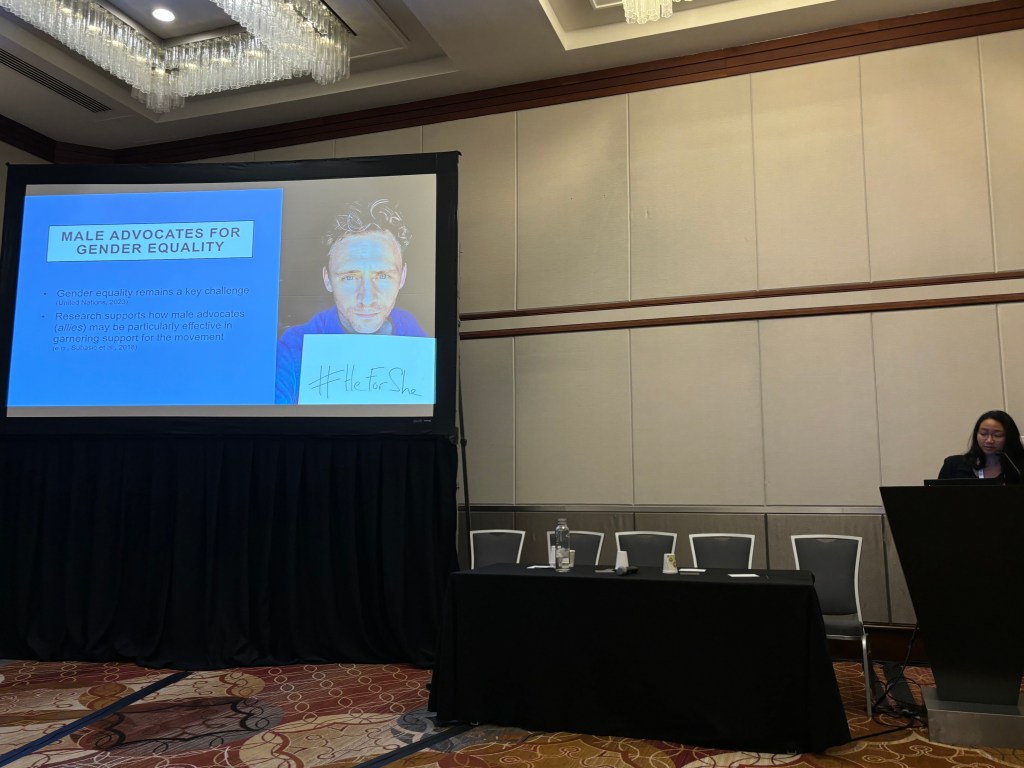
The third paper entitled “Male allyship: How appearing communal affects men’s careers”, led and presented by Janice Lam from York University/Canada, used an experimental approach to examine possible consequences of allyship for men’s careers. Male allies are critical for achieving gender equality, with research evidencing the benefits of male allyship – yet, men may hesitate to advocate due to fears of negative consequences. Integrating the literature on gender stereotypes and expectancy violation theory, Lam et al therefore examined in two experimental studies the effect of gender equality advocacy on men’s career outcomes. Counter to men’s fears, they found that men known to be gender equality advocates (vs. not known) were perceived as more communal, which in turn was associated with positive career outcomes, whereas these effects were not observed for women.
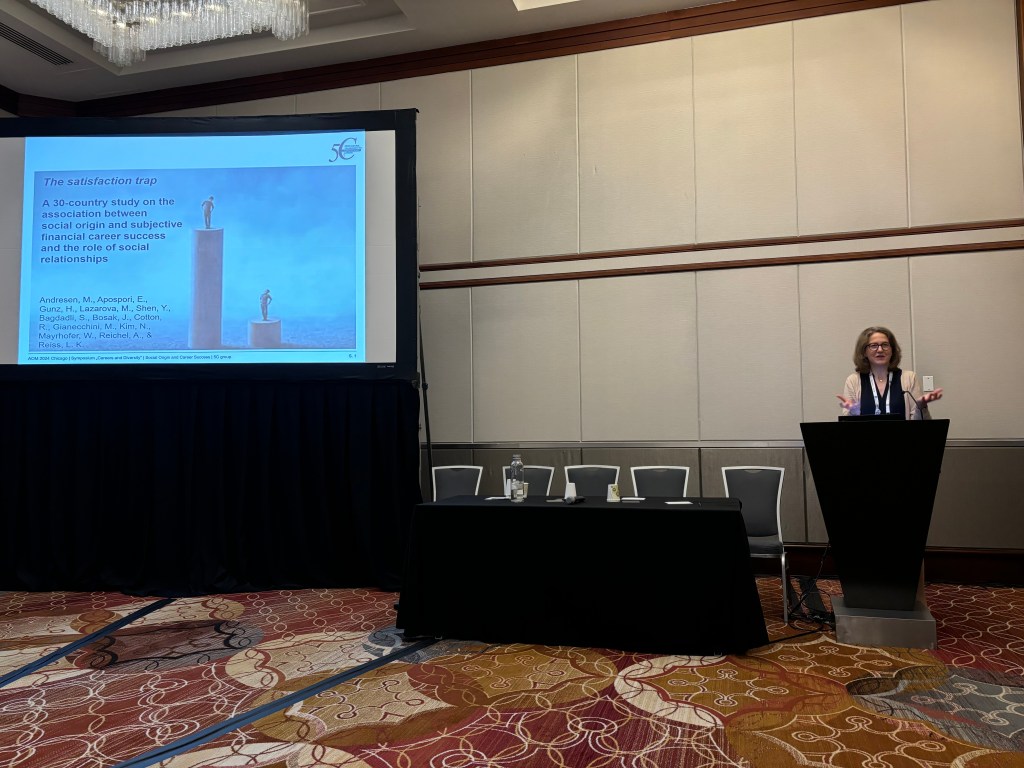
The fourth paper focused on the importance of social origin – an individual characteristic variable that fundamentally determines individuals’ access to valuable resources and shapes their careers from birth onwards – in the context of diversity and careers. Specifically, the paper entitled “Disadvantaged but satisfied? A 30-country study of the subjective financial career success of individuals from different social origins and the role of social relationships” was led and presented by Maike Andresen University of Bamberg/Germany. This study extends previous research in this field by providing insights as to why, despite differences in objective financial success, individuals from lower social origin tend to be more satisfied with their careers than individuals from higher social origin. Explanations for the why are grounded in standards (self-set standards and standards set by significant others) and country-specific standards in terms of the importance of relational social capital and tested using data from 19,452 individuals from 30 countries along with macro-level secondary data.
The last paper of the symposium builds on the work engagement literature and self-discrepancy by examining the question “Achieving congruence or achieving more? Career self-congruence effects on work engagement in 12 countries”. This paper is led by Najung Kim from Kookmin University/South Korea and was presented by Jon Briscoe. In this paper, the authors propose and test that there is a perceived congruence between individuals’ actual career status and the desired career status and that this congruence is positively related to work engagement for individuals from individualistic cultures only; in contrast, for individuals from collectivist cultures, career self-congruence is not related to work engagement; rather, work engagement is higher when an individual’s actual career self is higher than the desired career self. The findings from this study suggest the importance of examining the role of culture in career-related phenomena and their relationship with work engagement.
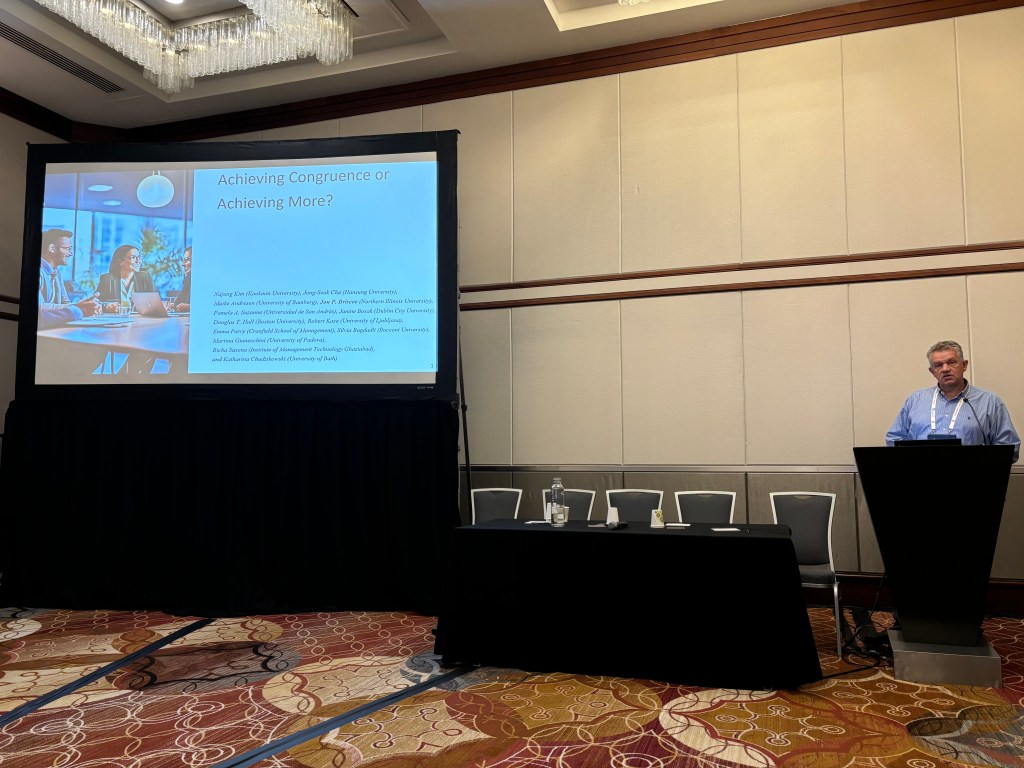
Following the presentation of the five papers, Beatrice van der Heijden, Professor of Work and Organizational Psychology at Radboud University/ The Netherlands, acted as discussant and shared her thoughts on the different papers and research on careers and diversity more generally– including for example the importance of a broader age conceptualization, the consideration of a whole-life approach to diversity and careers, an awareness of the satisfaction trap in education programmes as applied to the ‘social origin’ paper, and the need for more work on intersectionality. A lively discussion facilitated by Maike and Janine followed with the whole audience, further enriching the discussion with different perspectives, ideas for research and important practical implications that derived from this work on diversity and careers. We’d like to thank Beatrice, all presenters and their co-authors and the audience for their wonderful contributions and for making this a memorable 5C AOM symposium.
 Studying Contemporary Careers around the Globe